Welcome to the Museum
Arrive at 11 St Andrews Place and orient yourself for a working college that is also a museum of 500 years of medicine.
16 narrated clips through the Royal College of Physicians Museum — Lasdun’s building, Harvey, portraits, silver, and 500 years of medicine. Stream or download for offline listening.
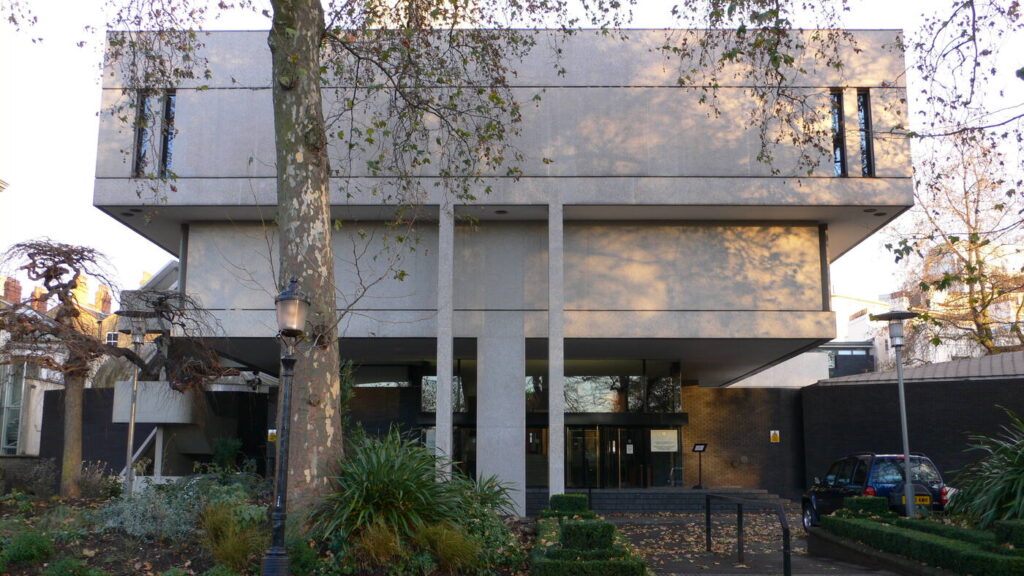
Explore the Royal College of Physicians Museum with a professional audio guide to 500 years of medicine in Denys Lasdun’s Grade I listed home beside Regent’s Park. Walk the halls, library, and treasures rooms with clear commentary shaped around the portraits, silver, instruments, and anatomical tables you will actually encounter.
The Royal College of Physicians Museum occupies the College’s headquarters at 11 St Andrews Place, on the Outer Circle of Regent’s Park. The College was founded by royal charter of Henry VIII in 1518, at the petition of the physician Thomas Linacre, and is the oldest medical college in England. Its collections have been gathered ever since: some 250 portraits, silver, instruments, books, medals, and rare teaching objects that show how physicians learned, practised, and wanted to be seen. Admission to the museum and medicinal garden is free for self-guided visits of up to five people. The museum is usually open Monday to Friday, 9am to 5pm, and until 8pm at monthly Museum Lates. It closes in August for conservation, on public holidays, and for some College ceremonies — check history.rcp.ac.uk before you travel.
The College has moved with the city. It occupied three sites in the City of London near St Paul’s Cathedral — including Amen Corner, destroyed in the Great Fire of 1666, which also consumed most of the library. A later home overlooked Trafalgar Square from Pall Mall East, now Canada House. The present building, designed by Sir Denys Lasdun and opened in 1964, is one of a very small number of post-war buildings listed at Grade I. Mosaic-clad concrete, a cantilevered upper storey, entrance piloti, and a central “floating” staircase frame a working headquarters that is also a public museum. Lasdun’s later Council Chamber and the seventeenth-century Spanish oak panelling of the Censors’ Room — a role created in the 1518 charter — keep older College life inside the new architecture. The College marked its 500-year anniversary in 2018.
William Harvey, fellow and Lumleian lecturer, sits at the centre of the origin story visitors still meet. His demonstration of the circulation of the blood, and objects such as his whalebone demonstration rod tipped with silver, remind you that this is a professional body, not a purpose-built gallery. The archives hold the original 1518 charter and official minutes from the sixteenth century onwards; Munk’s Roll, begun in the nineteenth century, still compiles biographies of fellows. The heritage library, rebuilt after the Fire, ranges from incunabula and books annotated by John Dee to the Dorchester collection and the Evan Bedford cardiology holdings. Together they show a college that examined, licensed, and taught — and that still does.
A visit is a walk through a working building as much as a museum. Sign in at reception for a visitor badge; some meeting rooms may be closed for conferences. The lower-ground Treasures Room holds College silver — little of it earlier than 1666, after a robbery the year before the Fire — the Prujean chest of seventeenth-century surgical instruments, and the Symons collection of Georgian self-care and later physicians’ tools. The Victor Hoffbrand collection of apothecary jars stands in the lower-ground hall. The central Lasdun Hall is hung with portraits of presidents and fellows, including sculpture by Edward Pierce and Louis-François Roubiliac. Off it lie the Censors’ Room and Council Chamber. On the first floor, temporary exhibitions occupy the gallery around the hall, and the Dorchester Library displays rare books. The exhibition A body of knowledge explores 500 years of book collecting until 23 July 2026.
On the second floor, six seventeenth-century anatomical tables — associated with John Finch — were made by drying and mounting blood vessels and nerves of the human body on wood, then varnishing them as teaching aids when cadavers were hard to obtain. Human remains are on display here; the museum flags this clearly. Outside, the medicinal garden plants more than 1,300 species around the building and along St Andrew’s Place, a living counterpart to the jars and books indoors. Together the collections argue that medicine is a history of looking: at bodies, at bottles, at portraits, and at the College’s own image.
Our Musequence audio guide offers sixteen clips — about twenty-four minutes of narration — from welcome and Lasdun’s modern home through Harvey and the archives, portraits and silver, instruments and anatomical tables, apothecary jars, books, exhibitions, and why this museum matters. Follow the full route or skip to the Treasures Room, library, or tables. Regent’s Park and Great Portland Street Underground stations are about four minutes’ walk; arrive from the Outer Circle, not Albany Street or Peto Place. Whether you come for Harvey, the silver, or Lasdun’s architecture, the guide helps you read the College as one story: England’s oldest medical college, still at work, opening its collections beside the park.
Arrive at 11 St Andrews Place and orient yourself for a working college that is also a museum of 500 years of medicine.
Read Denys Lasdun’s 1964 Grade I building — mosaic, brick, floating stair — as a new frame for much older College life.
Meet Harvey, Linacre, and the 1518 charter that made this England’s oldest medical college.
See how fellows’ gifts of papers, books, and objects became an archive of the profession itself.
Walk the Lasdun Hall portraits: physicians as sitters, models, and the public face of the College.
Look again at dress, pose, and patronage — how doctors staged status and learning in paint.
Handle with your eyes the College silver: ceremony, dining, and the rituals of a professional body.
Find the Prujean chest and surgical instruments that turn abstract history into the work of hands.
Read tools as evidence of diagnosis, surgery, and the limits of early modern practice.
Encounter John Finch’s seventeenth-century anatomical tables, rare teaching remains on the second floor.
Consider anatomy as a visual education — tables, books, and the College’s long habit of demonstration.
Pause at the Hoffbrand apothecary jars and the history of remedies, shops, and self-care.
Step into the Dorchester Library, where five centuries of donated books still shape how medicine is remembered.
See how temporary displays, including A body of knowledge, refresh the questions the collections can ask.
Use the building’s scattered displays — hall, rooms, garden — as an invitation to slow looking rather than a single gallery route.
Leave with a sense of the College as living institution and public museum beside Regent’s Park.
The guide has 16 narrated clips totalling about 24 minutes of audio. Most visitors combine it with time in the Treasures Room, Lasdun Hall, library, anatomical tables, and medicinal garden.
Yes. The museum and garden are free for self-guided visits of up to five people, Monday to Friday, 9am to 5pm (until 8pm at monthly Museum Lates). Groups of six or more should book a tour. The museum closes in August, on public holidays, and for some College events — check history.rcp.ac.uk before you travel.
Clips move from welcome and Lasdun’s 1964 building through William Harvey and the archives, portraits and silver, instruments, the anatomical tables, apothecary jars, books, exhibitions, and why the museum matters.
The museum is at 11 St Andrews Place, Regent’s Park, London NW1 4LE. Arrive from the Outer Circle only. Regent’s Park and Great Portland Street Underground stations are about four minutes’ walk.
Yes. After purchase in the Musequence app you can stream on your phone or download the clips for offline listening while you walk the building.
The Royal College of Physicians Museum audio guide is available from £4.99 in the Musequence app.
Royal College of Physicians Museum
11 St Andrews Place
Regent’s Park
London NW1 4LE
Musequence is in a private beta. Register for early access and we'll invite you as soon as guide creation and the mobile apps are ready.
Request Early Access