Welcome to Fulham Palace
Arrive at the former Bishop of London’s riverside palace and orient yourself for a walk through house, chapel, and botanic garden.
16 narrated clips through the former Bishop of London’s palace — Tudor halls, chapel, archaeology, and one of London’s oldest botanic gardens. Stream or download for offline listening.
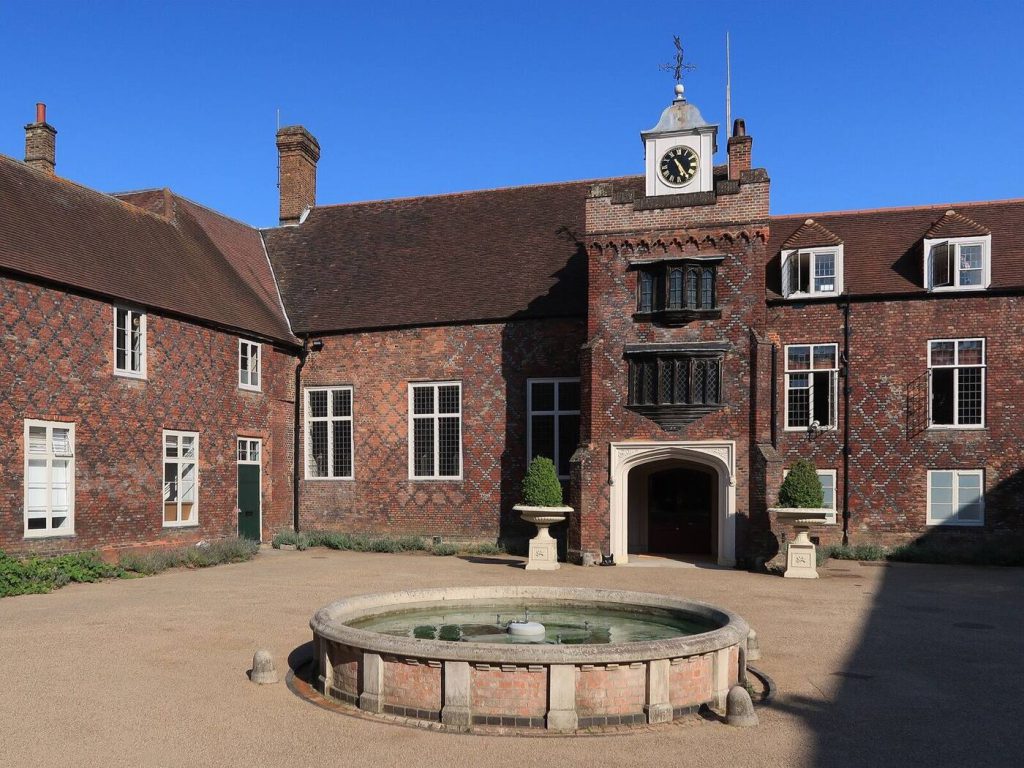
Explore Fulham Palace with a professional audio guide that brings centuries of bishops, households, and gardens to life. Walk the Grade I listed house and grounds beside the Thames with clear, engaging commentary shaped around the rooms and outdoor spaces you will actually visit.
Fulham Palace sits on the north bank of the River Thames in west London, on the site of a Saxon manor held by the bishops of London from the early eighth century until 1973. Today the much-reduced estate is a free museum and historic house managed by the Fulham Palace Trust, set within thirteen acres of Grade II* botanic garden beside Bishop’s Park. The buildings form a Grade I listed complex with medieval origins, Tudor courtyards, Georgian wings, and Gothic Revival additions — a rare survival of an episcopal residence in continuous use for almost a millennium.
The palace was the principal London home of the Bishop of London from the eleventh century. Substantial late-medieval and Tudor work created the Great Hall and west courtyard that still greet visitors: timber analysis dates the hall roof and gate to the 1490s, during the episcopates of Richard Hill and Richard FitzJames. Later bishops remodelled in Georgian and Gothic styles, while Bishop Archibald Campbell Tait commissioned William Butterfield’s chapel in 1866–7. The site also carries deeper time: archaeology has revealed Mesolithic and Neolithic flintwork, Bronze Age activity, late Roman occupation, and traces of the vast medieval moat — once among the largest domestic moated circuits in England.
Inside, restored historic rooms show how bishops lived and worked rather than simply how they displayed status. The Tudor Great Hall anchors the route; domestic apartments, libraries, and dining rooms reveal staff, hospitality, and administration. Portrait collections and museum displays introduce individual bishops and the personalities who shaped both church and estate. The Tait Chapel, damaged in the Second World War and later reordered, remains a focus of faith and memory, with Comper’s east window and striking mid-century wall paintings.
Outside, the gardens are central to Fulham Palace’s identity. Bishop Edmund Grindal’s Tudor walled garden tradition and Bishop Henry Compton’s pioneering plant collecting made this one of London’s most important botanical sites from the sixteenth century onwards — second only to Chelsea Physic Garden in age. Compton’s correspondents sent species from the Americas and beyond; magnolias, tulip trees, and early coffee plants once grew in heated stoves here. Visitors still find the reinstated moat landscape, main lawns, and a living walled garden that functions as both kitchen and horticultural laboratory.
After wartime use and decades of uncertainty, the bishops left in 1973. A long lease and later the Fulham Palace Trust guided phased restorations funded by the National Lottery Heritage Fund, culminating in renewed museum displays and courtyard brickwork by 2019. The house and gardens are open daily with free admission (book a free timeslot for the historic rooms). Our audio guide follows sixteen clips across welcome and origins, architecture and household life, collections and archaeology, chapel, and gardens — around nineteen minutes of narration you can pace to a fuller visit of an hour or more.
Use the guide as a continuous route or skip to the themes that interest you most: the Great Hall, portraits, chapel, moat, or plant collections. Whether you arrive via Putney Bridge and Bishop’s Park or along Bishop’s Avenue, the commentary helps you read the layered architecture and landscape as one story — from Saxon manor and bishop’s palace to public museum and botanic garden on the Thames.
Arrive at the former Bishop of London’s riverside palace and orient yourself for a walk through house, chapel, and botanic garden.
Trace the manor of Fulham from early medieval episcopal ownership to a residence that served bishops for centuries.
Read Tudor brickwork, Georgian wings, and later alterations as one layered courtyard ensemble.
Look beyond ceremony to kitchens, staff, and the everyday machinery of an episcopal household.
Stand in the late-medieval Great Hall — the ceremonial heart of the palace since the 1490s.
Move into apartments and dining rooms that reveal how bishops lived, entertained, and administered.
Meet bishops and sitters through the palace’s portrait collection and museum displays.
Understand how a once-extensive episcopal estate shrank to today’s house, gardens, and neighbouring Bishop’s Park.
Discover prehistoric flint, Roman finds, and the story of the great medieval moat under the lawns.
Follow the twentieth-century departure of the bishops and the Trust-led restorations that opened the palace to everyone.
Enter William Butterfield’s Gothic Revival chapel for Bishop Tait — the fourth chapel on this sacred site.
Reflect on worship, memory, and wartime damage through windows, mosaics, and wall paintings.
Walk the main gardens and the reinstated moat landscape that once encircled England’s largest domestic moated site.
Step into the walled garden where kitchen produce and horticultural experiment still share the same walls.
Celebrate Bishop Compton’s botanical legacy and the living collections that make Fulham a historic botanic garden.
Leave with a sense of deep time — Saxon manor, bishop’s palace, museum, and garden beside the Thames.
The guide has 16 narrated clips totalling about 19 minutes of audio. Most visitors combine it with an hour or more exploring the historic rooms and gardens at their own pace.
Yes. Entry to the house and garden is free. Book a free timeslot for the museum and historic rooms; donations to the Fulham Palace Trust are welcome.
Clips move from welcome and Saxon-to-palace origins through the courtyard and Great Hall, domestic rooms and portraits, archaeology, the Tait Chapel, the moat and main gardens, and the walled botanic garden.
The nearest Underground station is Putney Bridge on the District Line, then a walk through Bishop’s Park. Buses serve Fulham Palace Road and Putney Bridge. The address is Bishop’s Avenue, Fulham, London SW6 6EA.
Yes. After purchase in the Musequence app you can stream on your phone or download the clips for offline listening while you walk the site.
The Fulham Palace audio guide is available from £4.99 in the Musequence app.
Fulham Palace
Bishop’s Avenue
Fulham
London SW6 6EA
Musequence is in a private beta. Register for early access and we'll invite you as soon as guide creation and the mobile apps are ready.
Request Early Access